






Conching is one of the most critical stages in chocolate making. While traditional high-energy conching focuses on speed and aggressiveness, low-impact conching prioritizes flavor preservation, gentle refinement, and respect for the cocoa’s natural character. For artisan chocolatiers and bean-to-bar makers, this approach delivers cleaner taste, smoother texture, and greater aromatic complexity.
What Is Low-Impact Conching?
Low-impact conching is a gentle mechanical process that refines chocolate at controlled temperatures and reduces shear force. Instead of aggressively stripping volatile compounds, it gradually develops texture while preserving natural cocoa aromas.
This method is widely used by craft chocolate makers who value origin flavor, fermentation notes, and balanced acidity.
Why Gentle Conching Matters
- Flavor preservation: Retains delicate fruity, floral, and nutty notes.
- Aroma integrity: Minimizes loss of volatile compounds.
- Texture refinement: Achieves smooth mouthfeel without over-processing.
- Lower thermal stress: Reduces risk of burnt or flat flavor profiles.
Low-Impact vs Traditional High-Energy Conching
| Aspect | Low-Impact Conching | High-Energy Conching |
|---|---|---|
| Shear force | Low & controlled | High & aggressive |
| Temperature | Moderate, stable | Often higher |
| Flavor outcome | Expressive, origin-driven | Neutralized, uniform |
Key Parameters for Low-Impact Conching
- Time: Longer conching allows gradual refinement.
- Temperature: Typically lower to protect volatile aromas.
- Mechanical action: Gentle mixing and friction.
- Particle size: Controlled reduction without over-shearing.
Equipment Suited for Low-Impact Conching
Professional equipment with precise control is essential. Low-impact conching is commonly achieved using:
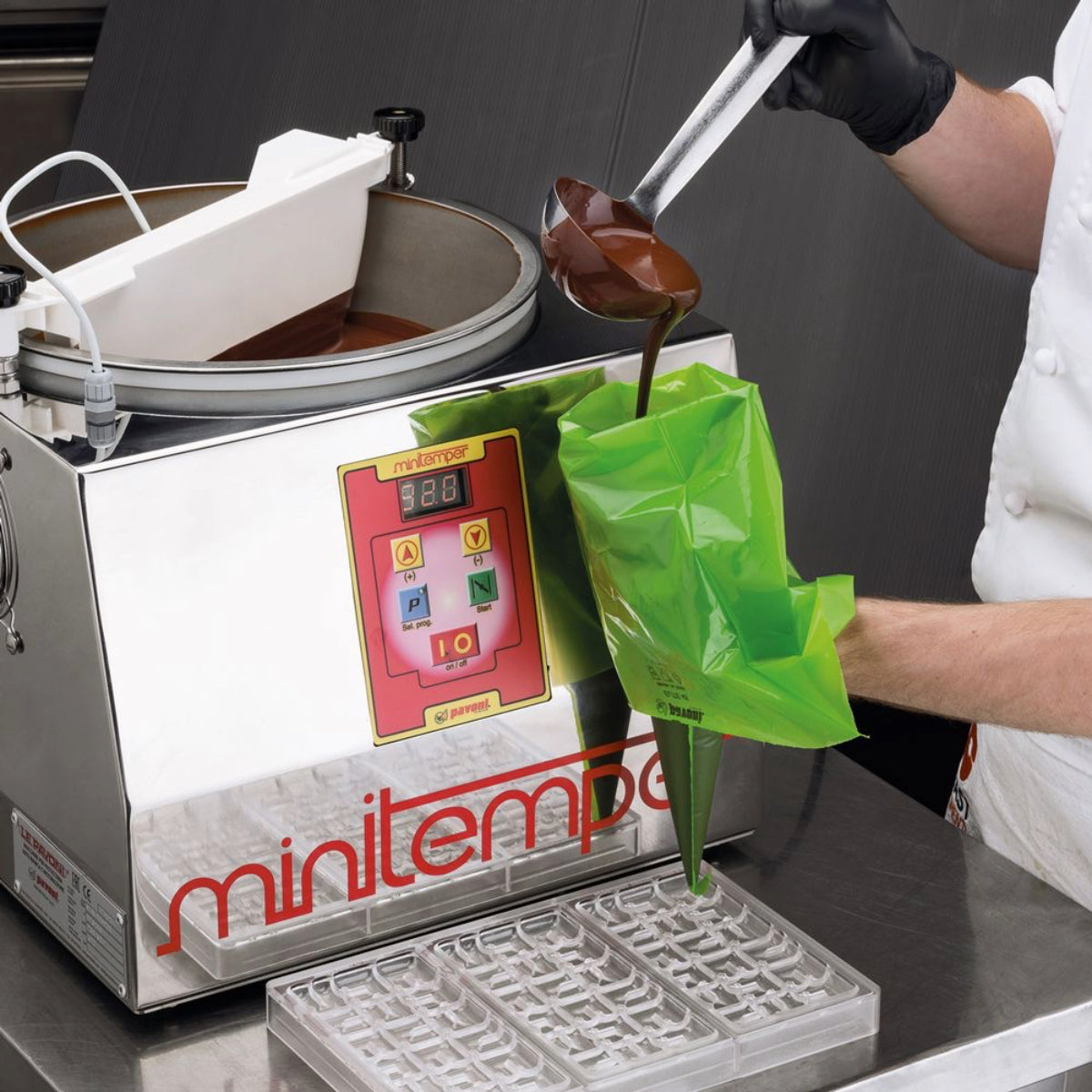
- Tabletop and small-batch conching systems designed for bean-to-bar production.
- Melters and refiners with stable temperature control that prevent overheating.
- Professional conching units from trusted manufacturers such as Mol d’Art and Chocolate World, known for reliability and precision.
Choosing the right machine allows chocolatiers to adjust parameters based on cocoa origin, roast level, and desired flavor profile.
Who Should Use Low-Impact Conching?
- Bean-to-bar chocolate makers
- Single-origin chocolate producers
- Artisan chocolatiers focused on flavor complexity
- Producers working with fine or lightly roasted cocoa
Practical Tips for Better Results
- Start with well-fermented, properly roasted cocoa.
- Monitor temperature continuously to avoid aroma loss.
- Adjust conching time rather than increasing speed.
- Taste frequently — conching is as much sensory as technical.
Why Low-Impact Conching Is the Future of Craft Chocolate
As consumers increasingly value transparency, origin, and flavor authenticity, low-impact conching aligns perfectly with modern expectations. It respects the cocoa, the farmer’s work, and the chocolatier’s vision.
At Zucchero Canada, we support chocolate professionals with equipment designed to deliver precision, consistency, and control — essential elements for low-impact chocolate processing.
Crafting Sweet Masterpieces – Zucchero Canada






Leave a comment
All comments are moderated before being published.
This site is protected by hCaptcha and the hCaptcha Privacy Policy and Terms of Service apply.